Sperm quality warning men’s health
Introduction: When Fertility Becomes a Barometer of Health
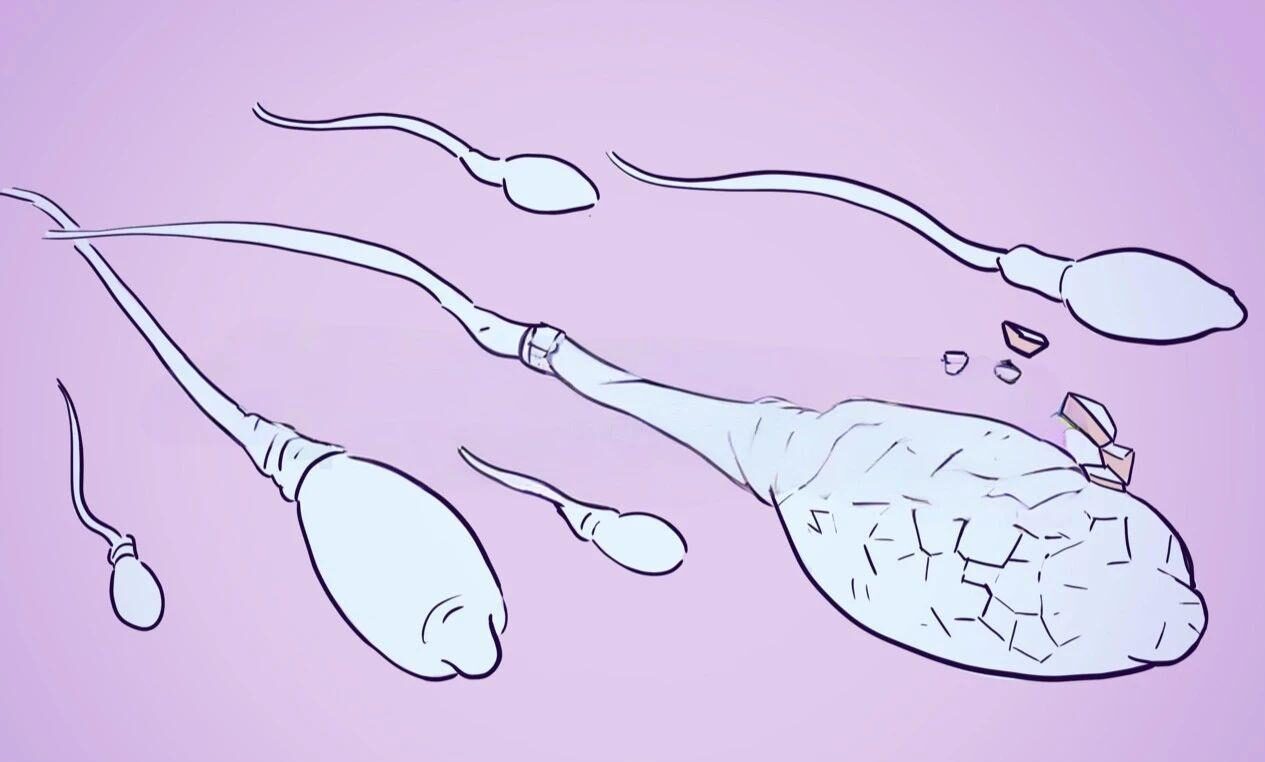
When Danish scientist Dr. Lærke Priskorn looked through 78,284 men’s records, a paradoxical pattern emerged: men with total motile sperm counts >120 million lived an average of 2.7 years longer than those with <5 million. The 50-year study revealed that the testes are not only the starting point of life, but also the silent sentinels of health and longevity – for every level of decline in semen quality, the risk of all-cause mortality climbs by 12%.
I. The brutal truth beneath the cold data: the life codes of 80,000 men
(i) The “dose-death effect” of semen parameters
The Danish National Cohort Study (1965-2015) found a clear gradient association between semen quality and life expectancy:
| Semen parameters | High-value group life expectancy | Life expectancy in the low-value group | poor life span | Increase in risk of death |
|---|---|---|---|---|
| Total motile sperm count | 80.3 years | 77.6 years | 2.7 years | +40% |
| Sperm concentration (million/ml) | 79.8 years | 76.9 years | 2.9 years | +37% |
| normal morphology rate | 79.5 years | 77.1 years | 2.4 years | +29% |
Dr. Niels Jørgensen, the study leader, emphasized that this association is independent of education level and underlying disease, suggesting that sperm quality is a “biological marker” of general health.
(ii) The “survival paradox” of azoospermia
Paradox: The risk of death in azoospermic individuals is lower than in those with very low sperm counts (77.8 vs. 77.6 years).
Mechanism: Patients with obstructive azoospermia (vasectomy) have normal testicular function, whereas those with severe oligozoospermia often have systemic metabolic disturbances.
Clinical warning: Men with sperm counts of 5-10 million/ml should be prioritized for screening of insulin resistance and thyroid function.
II. Global crisis: warning of precipitous decline in sperm counts
(i) Transcontinental trend of decline
A meta-analysis by Hebrew University of Israel (223 studies/57,000 men) showed:
1973→2018: 51.6% decline in global male sperm concentration (101 million→49 million/ml), 62.3% decline in total sperm count
Crisis accelerated: decline doubled after 2000, with an average annual decline of 2.64%
China corroborated: Hunan sperm bank data shows that volunteer pass rate plummeted from 55.8% to 17.8% from 2001-2015.
(ii) The “triple shockwave” of recession
Fertility collapse: 15% of couples worldwide are infertile, with male factor accounting for more than 50%
Disease risk: Decreasing sperm counts are accompanied by increasing incidence of testicular cancer and decreasing androgen levels
Intergenerational transmission: oxidative stress damage in the paternal generation can epigenetically affect neurodevelopment in the offspring
Biological Mechanisms: The “Double-edged Sword Effect” of Oxidative Stress
(i) The mitochondria-chromatin death conversation
Ankara University study found that DNA fragmentation (DFI) is directly triggered by mitochondrial dysfunction in the mid-segment of spermatozoa:
Golden Zone Paradox: DFI risk soars 120% at mid-segment area <2.31μm² or >3.13μm²
Clinical Tipping Point: DFI >20% increases miscarriage rate 3-fold and positively correlates with Alzheimer’s disease biomarkers
(ii) Ripple effect of telomere erosion
Early warning value of sperm: morphologically abnormal sperm carry shorter somatic telomeres (a marker of aging)
Defective gene repair: sperm DNA breaks suggest failure of systemic cellular repair mechanisms and increased risk of cancer
Prof. John Aitken (University of Newcastle, Australia) asserts: “Oxidative stress is a common enemy of semen quality and longevity Oxidative stress is the common enemy of semen quality and longevity — it burns both germ cells and organ cells”.
Clinical Intervention: From Sperm Improvement to Lifespan Extension
(i) Precise regulation of reversible factors
considerations mechanism of action Intervention strategies Magnitude of improvement varicose veins of the spermatic cord Testicular hyperthermia/oxidative damage microligation Sperm concentration ↑48% hypophosphatemia collapse of energy metabolism Sodium phosphate supplements + vitamin D Vitality ↑30% sleep deprivation Melatonin-testosterone axis disorder Sleep by 22:00 + dark environment Forward motion ↑35%
Source: European Society of Endocrinology (ESPE) 2025 Consensus
(ii) Nutritional antioxidant “triple defense”
Mitochondrial protection: Coenzyme Q10 200mg/day → neutralizes reactive oxygen species (ROS)
Membrane stability: Selenium 60μg/day → improves sperm membrane resistance to peroxidation
Gene stabilization: Zinc 15mg/day → maintains DNA polymerase activity
V. Future medicine: sperm analysis of the “disease early warning system”
(I) Artificial intelligence semen diagnosis
Technological breakthrough: Convolutional neural network predicts diabetes risk through sperm morphology (AUC=0.91)
Application scenario: routine semen testing in fertility clinics → synchronized generation of metabolic disease risk assessment reports
(ii) Epigenetic Marker Mining
Sperm small RNA profiling: carrying transgenerational epigenetic imprints for obesity, depression, and other diseases7
Clinical significance: blocking intergenerational disease transmission through semen screening
Rigshospitalet Hospital Initiative: annual semen tests for men over 30 years of age should be included in routine medical checkups, equivalent to blood pressure monitoring.
Conclusion: Reinventing a new paradigm in men’s health management
“When a man visits the clinic for infertility, we see more than just a reproductive problem – that’s the first alarm from whole-body health.” The aphorism of Prof. Niels Jørgensen of the University of Copenhagen announces a paradigm revolution in men’s health assessment.
Action list:
Basic assessment: semen analysis + DFI test (especially ≥35 years or second child failure)
Crisis intervention:
→ oligospermia: immediate screening for Hs-CRP, fasting insulin
→ azoospermia: differentiate between obstructive and testicular failure (FSH/LH test)
Lifelong strategy:
Sleep by 22:00 daily (safeguard pulsatile testosterone secretion)
Avoid tight pants/hot tubs (testicular temperatures >37°C for 2 hours is (testicular temperature > 37°C for 2 hours can damage spermatogenesis)
Ultimate Formula: Healthy Longevity = (Sperm Quality Index × Oxidative Stress Control) ÷ Environmental Toxin Exposure
The Medical Revolution: From Focusing on Whether We Can Procreate to Guarding How We Can Live Longer -The testicles are becoming the ultimate sentinel station for men’s health.